
VapeStation Blogs
Oral Hygiene And Breath During Ramadan
Mar
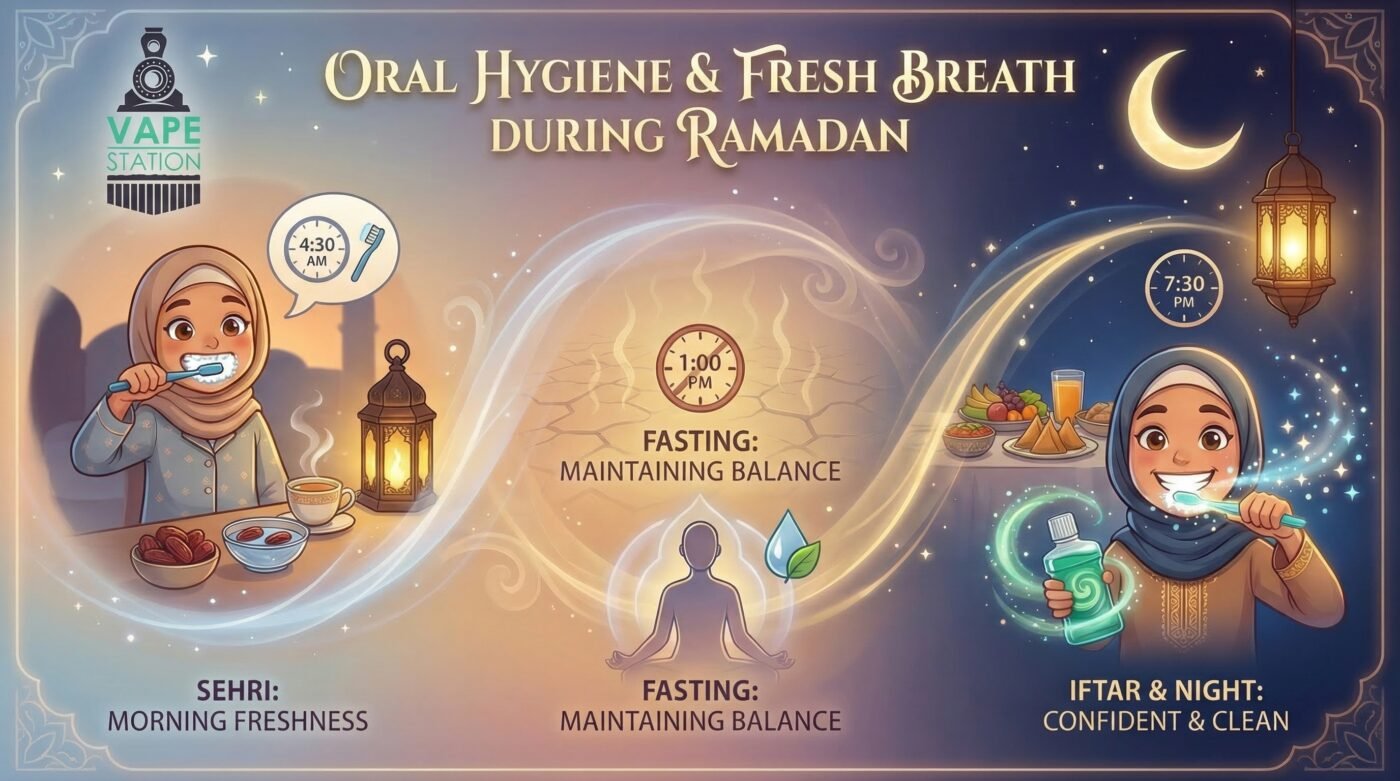
Ramadan changes your whole routine, and your mouth feels it too.
When you are fasting, the day gets long, water is off the table, chai is gone, and by the time Asr rolls in, many people feel that familiar dry mouth, sticky feeling, and not-so-fresh breath. Then Maghrib comes, and suddenly it is pakoray, samosay, chutney, fizzy drinks, tea, dessert, late-night snacks, maybe a vape after iftar, and then sleep. In between all that, oral hygiene can easily become an afterthought.
But the truth is simple: Ramadan is much easier when your mouth feels clean.
Fresh breath, less dryness, cleaner teeth, and calmer gums can make a real difference in how you feel from iftar to bedtime. And no, this does not need some expensive routine or ten different products. You just need a simple, realistic system that works with fasting life in Pakistan.
In this blog, we will cover why dry mouth gets worse in Ramadan, how food, tea, sweets, and vaping can affect breath, what to do about gum sensitivity, and a practical oral care routine you can follow from iftar to bedtime without making it complicated.
Why Mouth Issues Feel Worse In Ramadan
During Ramadan, many people notice the same things:
• Dry mouth
• Morning breath lasting longer into the day
• Sticky feeling on teeth
• Gums feeling more sensitive
• A heavier mouth after iftar foods
• Strange taste after tea, desserts, or vaping
This happens because your routine changes from normal life.
When you are fasting, there is less saliva flow during the day because there is no eating or drinking. Saliva matters more than people realize. It helps your mouth feel fresh, helps wash away leftover particles, and reduces that dry, stale feeling.
Then the evening brings its own problems.
A lot of people break their fast with dates, drinks, fried snacks, chutneys, sweet items, tea, and later dinner. The mouth goes from dry and empty to overloaded very quickly. That mix can leave a coating in the mouth, especially if brushing gets delayed or skipped.
Dry Mouth Is Not Just A Comfort Issue
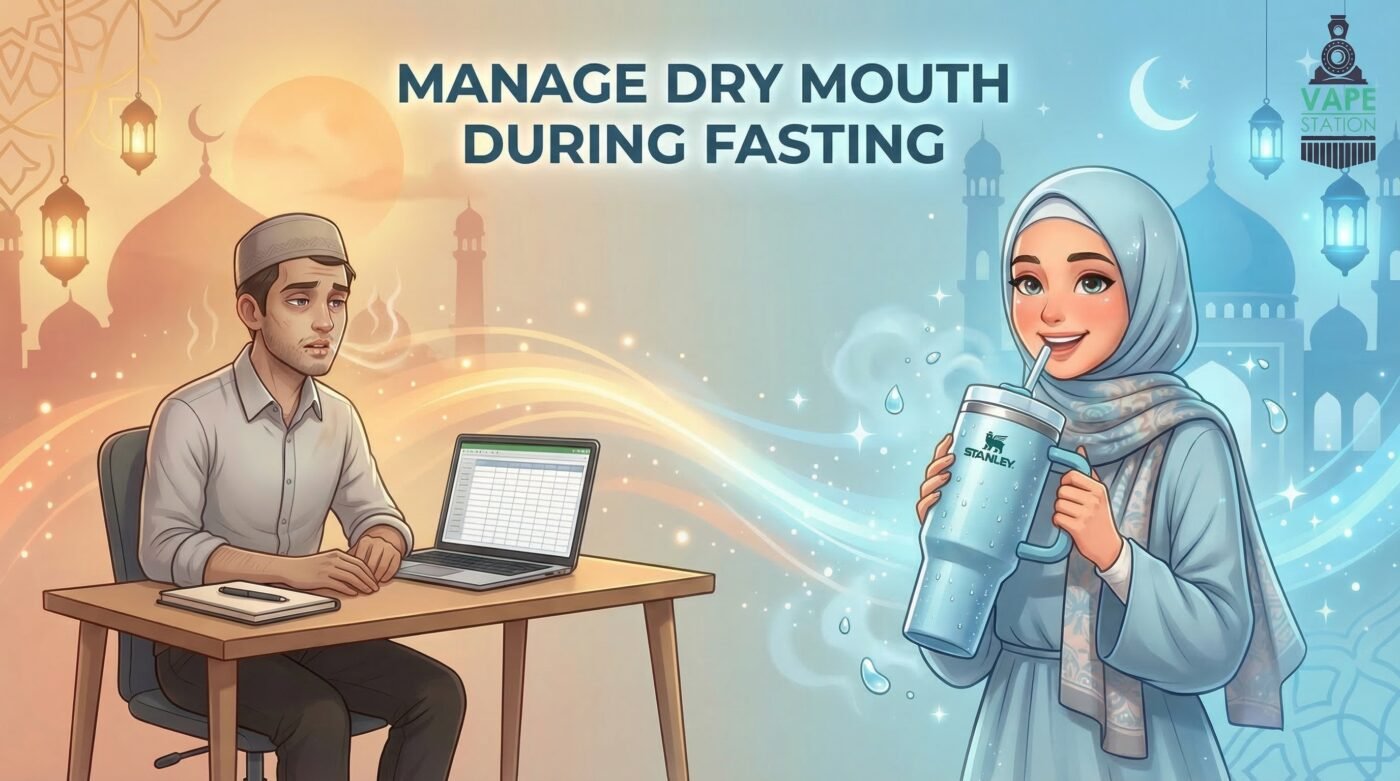
Dry mouth is one of the biggest Ramadan complaints, and it affects more than just how your mouth feels. When your mouth stays dry, breath usually feels worse. Your tongue can feel coated. Your lips may feel sticky. Some people also feel mild gum discomfort or a rough taste that stays even after food.
Then there is the social side.
You are sitting in the office after Zuhr, talking to a colleague. You are standing shoulder to shoulder in Taraweeh. You are in a car with family on the way to an iftar dawat. In all these moments, mouth freshness matters more than people admit.
That is why oral hygiene in Ramadan is not only about appearance. It is also about comfort, confidence, and routine.
Why Breath Changes During Fasting?
A lot of people assume breath issues only come from not brushing. That is not the full story.
During fasting hours, the mouth naturally feels different because:
• There is no water intake
• Saliva production is lower
• The mouth stays inactive for long periods
• Dryness builds up through the day
Then after iftar, a second wave starts.
Foods like pakoray, rolls, fried items, spicy chutneys, haleem, biryani, kebabs, and sweets can leave strong after-effects in the mouth. Add chai on top, then dessert, then maybe late-night snacking, and the mouth is doing extra work.
If vaping is part of your evening routine, that can also add to dryness and stale-mouth feeling, especially if water intake is low.
So the problem is usually not one thing. It is the whole pattern.
The Iftar Problem: Too Much, Too Fast
Most people already know this scene.
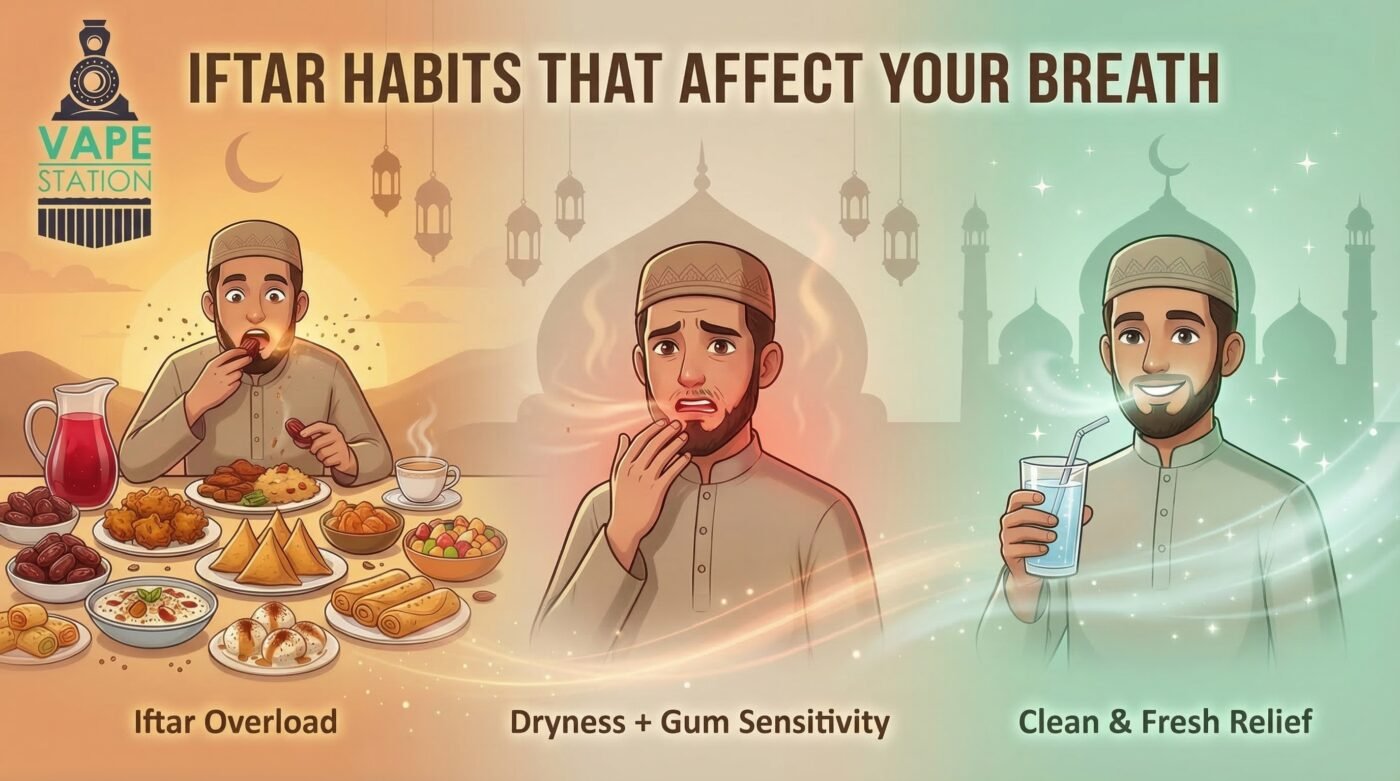
Maghrib azaan happens. Everyone is hungry. The table is full. Dates, Rooh Afza, pakoray, fruit chaat, dahi baray, samosay, nuggets, rolls, then tea, then later proper dinner. In many homes, it is not one meal. It is three small meals pretending to be one evening.
That kind of eating pattern affects the mouth quickly.
Sugary drinks can leave a coating. Fried foods can make the mouth feel heavy. Chutneys and masalay can leave lingering smell. Tea can worsen dryness for some people. Then if you lie down without proper cleaning, you wake up with your mouth feeling like it lost a fight.
This is why brushing only in the morning and hoping for the best is not enough during Ramadan.
Vaping, Dryness, And Breath
If you vape after iftar, oral hygiene matters even more.
A lot of people like that first puff after a long fast, and fair enough, but vaping can make the mouth feel drier, especially when:
• You have not rehydrated properly
• You vape continuously after iftar
• You combine it with tea or coffee
• You are already eating salty or spicy foods
That dryness can make breath feel heavier and the mouth feel less fresh. It may also make the gums feel slightly more sensitive in some people.
This does not mean you need a dramatic routine. It just means vaping works better when it sits inside a smarter evening pattern:
water first, food settled, mouth cleaned, then controlled use instead of constant puffing.
That makes the whole night feel cleaner.
Gum Sensitivity During Ramadan
Some people notice that their gums feel more irritated in Ramadan. Not severe, just slightly off.
This often shows up as:
• Tender feeling while brushing
• Slight discomfort after spicy food
• Mouth feeling “heated” after tea or vape
• Gums feeling rough when the mouth is dry
The answer is usually not to stop brushing. It is to brush better and gentler.
A lot of people brush too hard when they want that super-clean feeling. But aggressive brushing can make the gums feel worse. During Ramadan, when the mouth is already dry, rough brushing can be extra irritating.
The goal is not force. The goal is consistency.
Your Simple Oral Hygiene Routine From Iftar To Bedtime
Now let’s get practical.
You do not need a complicated eight-step system. A simple, repeatable routine is enough.
Step 1: Start With Water At Iftar
Before you jump into everything else, drink water properly.
Not in a rushed “water tank loading” style where you throw down a few gulps and move on. Drink calmly. Let your mouth and throat settle.
This helps with dryness and prepares your mouth better before tea, fried food, or vaping enter the picture.
Step 2: Break Your Fast, But Don’t Ignore What Stays In The Mouth
Dates and iftar food are part of the experience, but remember that sticky and sugary foods can stay on the teeth.
You do not need to run to the sink after the first bite. Just stay aware that your mouth will need cleaning later, especially if the evening includes sweets and multiple rounds of food.
Step 3: Rinse After Eating
A simple water rinse after iftar or dinner helps more than people think.
It can help remove:
• Food particles
• Sweetness coating
• Strong chutney or masala taste
• Heavy after-smell from fried foods
This is especially useful if you are not brushing immediately.
Step 4: Brush At Night Properly
Your main brushing session in Ramadan should be at night, after the evening food cycle settles.
Use a soft toothbrush and brush calmly. No need to attack your teeth like you are scrubbing a pan. Clean the teeth thoroughly, clean along the gumline gently, and take your time.
This is the brush that matters most because it clears the buildup of the whole evening.
Step 5: Clean The Tongue Too
A lot of breath issues stay on the tongue, not just the teeth.
If you only brush your teeth and ignore the tongue, the mouth may still feel stale. A gentle tongue cleaning can help remove that coated feeling and make the mouth feel fresher before sleep.
Step 6: Rinse Again Before Bed If Needed
If you eat again after brushing, like dessert, chai biscuits, midnight snacks, or sehri leftovers early, then at least rinse again.
Ramadan nights often stretch long. People eat in rounds. So one fixed brushing time may not cover everything perfectly. A final rinse can help keep the mouth from feeling heavy overnight.
The Best Time To Brush In Ramadan
If you want the simplest possible answer, these are the most useful times:
• After iftar / dinner cycle settles
• Before bed
• After sehri if needed
If someone wants only one must-do brushing session, the strongest choice is before bed, because that is when the mouth has collected the whole evening’s food, drink, and flavour buildup.
If you can do two, even better.
Small Habits That Keep Breath Fresher At Night
Fresh breath in Ramadan is usually about small decisions, not miracles.
Drink Water Properly Between Iftar And Bedtime
Do not leave all hydration for the last minute before fajr. Spread it out through the evening. A better hydrated body usually means a less dry mouth.
Go Easy On Constant Sweet Drinks
One sharbat is one thing. But some people keep switching between fizzy drinks, sweet juices, tea, and dessert all evening. That pattern can leave the mouth feeling coated.
Don’t Sleep Right After A Heavy Food Session
If you eat, drink tea, maybe vape, and then immediately lie down, the mouth often feels worse by morning. Give your body a little time, rinse or brush, then sleep.
Be Careful With Late-Night Chai
Tea is part of Ramadan life in Pakistan. No lecture there. But tea after sweets, after spicy food, and after vaping can leave the mouth feeling dry and less fresh. Water in between helps.
Sehri Matters More Than People Think
A lot of people treat sehri like a deadline panic.
They wake up half asleep, eat quickly, drink too much water in a rush, maybe have tea, maybe something salty, and then go back to bed. That usually does not help the mouth.
A smarter sehri routine can make the next day easier.
What Helps At Sehri?
• Water taken steadily, not all at once
• Less very salty food
• Less sugary drinks
• A final rinse after eating
• Brushing if your routine allows it
If sehri ends and your mouth already feels coated, the next fasting day starts on the wrong foot.
Office Breath, Masjid Breath, Social Breath
Let’s be honest. Ramadan is social.
You are talking to family at iftar. Meeting colleagues at work. Standing close in prayer. Going to market for Eid shopping. Visiting relatives. Sitting in cars. Attending dawat after dawat in the last ashra.
Breath confidence matters.
That is why a clean mouth is not vanity. It is part of daily ease. When your mouth feels fresh, you talk more comfortably, sit more confidently, and do not keep second-guessing yourself in every close conversation.
Last Ashra, Less Sleep, More Mouth Fatigue
In the last ashra, routines get even more intense.
There is more ibadat, late nights, Taraweeh, maybe tahajjud, maybe i’tikaf for some, and often more shopping, more travel, and more disruption to sleep. The mouth feels this too.
Less sleep often means more laziness with self-care. People come home tired and skip brushing. Then they wake for sehri with a dry, stale mouth and repeat the cycle.
This is exactly when a very simple routine wins.
Keep it basic. Keep it consistent.
A Realistic Ramadan Oral Care Checklist
Here is the easy version that most people can actually follow:
• Drink water properly from iftar onward
• Rinse after iftar and after heavy food
• Brush gently at night
• Clean the tongue
• Avoid sleeping right after food without cleaning
• Do a final rinse after late-night snacks
• Keep sehri lighter on salt and sugar if possible
• Stay consistent, not perfect
That is enough for most people.
Final Thoughts
Ramadan changes your mouth more than people realize.
The long fasting hours can bring dry mouth and heavier breath, while the evening routine of fried foods, sweets, tea, late dinners, and vaping can leave the mouth feeling coated, sensitive, and tired. But this does not need an extreme fix.
A simple hygiene routine from iftar to bedtime can make a big difference.
Drink water properly. Rinse after meals. Brush gently at night. Clean the tongue. Stay aware of dryness. And if you vape, do not let it become an all-night habit without hydration and basic mouth care around it.
The goal is not to become obsessive. The goal is to keep things clean, comfortable, and manageable during a month that already changes everything else.
When your mouth feels fresh, the whole Ramadan routine feels easier. And sometimes, in a month of long days and short nights, that kind of small comfort matters a lot.